
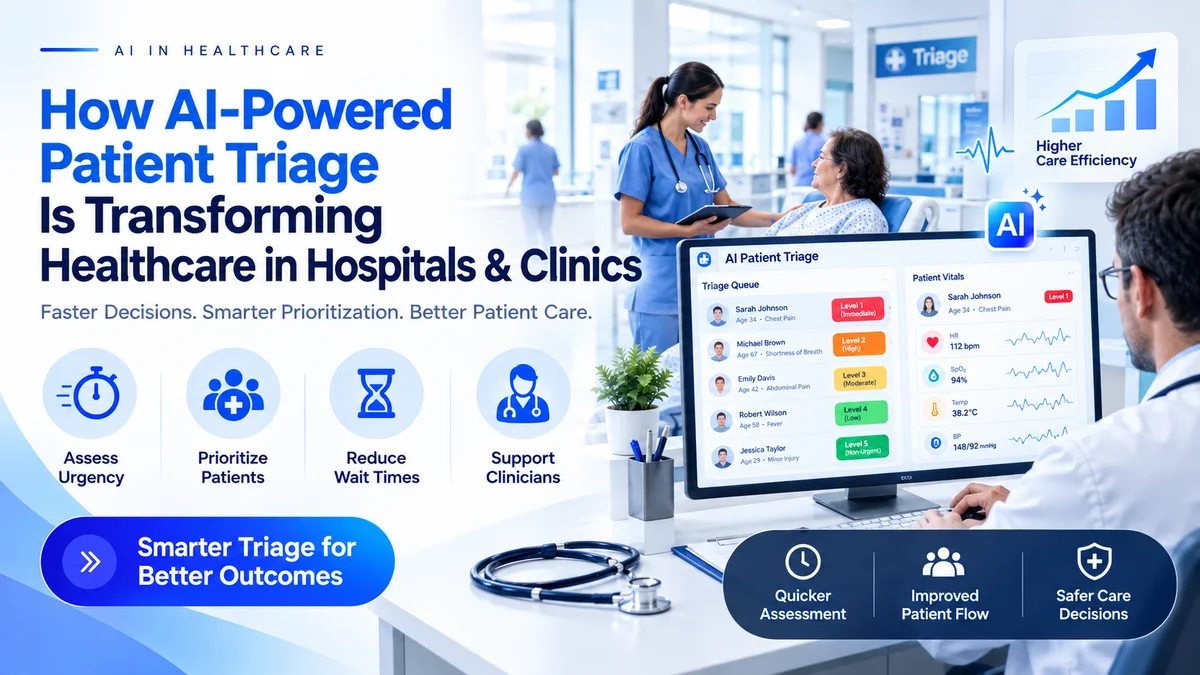
How AI-Powered Patient Triage Is Transforming Healthcare in Hospitals & Clinics
Healthcare providers today are managing increasing patient volumes, limited staff availability, and growing pressure to deliver faster and more efficient care. One of the most important steps in the patient journey is triage understanding a patient's reported symptoms, assessing the urgency of their needs, and directing them toward the appropriate care pathway. Traditional triage often depends on phone calls, front-desk interactions, manual forms, and staff availability. These processes can increase administrative workload and make patient intake more time-consuming. AI-powered patient triage is helping transform this process. Solutions such as Virtual Jane use conversational AI to interact with patients, collect relevant information, support predefined triage workflows, and guide patients toward the appropriate next step while keeping healthcare professionals involved in clinical decision-making.
The Problem: Challenges in Traditional Patient Triage
Traditional patient triage can become challenging when hospitals and clinics receive a high volume of patient requests. Common challenges include :
- High Patient Volume : Front-desk teams and healthcare staff may need to handle multiple patient calls, inquiries, appointment requests, and symptom-related questions simultaneously.
- Time-Consuming Manual Processes : Collecting basic patient information manually can take valuable staff time. Patients may also need to repeat the same information to different members of the healthcare team.
- Delays in Patient Response : When staff are busy with in-person patients or administrative responsibilities, responding to incoming patient requests may take longer.
- Inconsistent Information Collection : Different staff members may collect different information during the initial interaction, making it difficult to maintain a consistent patient-intake process.
- Limited Availability Outside Working Hours : Patients may need assistance before or after regular clinic hours when reception and administrative teams may not be available.
AI-powered triage can help address these operational challenges by providing an automated first point of interaction for patients.
How AI-Powered Patient Triage Works
An AI-powered triage system can act as a digital assistant between patients and healthcare teams. Virtual Jane can interact with patients through conversational interfaces, ask relevant questions, collect information, and support the appropriate patient-care pathway. A typical workflow can include:
Step 1 : Patient Interaction
The patient starts a conversation with Virtual Jane through an available digital channel. The AI assistant can understand natural-language questions and respond conversationally.
Step 2 : Information Collection
Virtual Jane can collect relevant information such as:
- Patient details
- Reason for consultation
- Reported symptoms
- Duration of symptoms
- Relevant medical information
- Preferred appointment details
Step 3 : Initial Triage Support
Based on the information provided, the system can support categorization according to predefined clinical and organizational workflows. Depending on the configured protocol, patients may be guided toward:
- Emergency care
- Urgent medical attention
- Routine consultation
- Specialist appointment
- Follow-up consultation
- General healthcare information
The AI system should follow predefined protocols and escalation rules rather than independently replacing a qualified healthcare professional.
Step 4 : Appointment Booking
When appropriate, Virtual Jane can help patients move from initial triage to appointment scheduling. This creates a connected patient journey :
- Initial Interaction
- Information Collection
- Triage Support
- Appointment Booking
Step 5 : Healthcare Team Handoff
When human intervention is required, relevant information can be passed to the appropriate healthcare team according to the organization's workflow. This can reduce repetitive information collection and help staff begin with more relevant patient context.
Key Benefits of AI-Powered Patient Triage
- Faster Patient Response: AI-powered assistants can respond to patient queries quickly, helping reduce waiting time for initial interactions.
- Reduced Administrative Workload: By automating repetitive information collection and basic patient-intake activities, AI can help administrative teams focus on higher-value tasks.
- Better Patient Flow: Connecting triage with appointment scheduling can help create a smoother patient journey and direct patients toward the appropriate care pathway.
- 24/7 Patient Access: AI assistants can provide an initial point of interaction outside traditional reception hours, subject to the organization's configuration and escalation protocols.
- Consistent Information Collection: AI-powered workflows can follow predefined questions and protocols, helping healthcare organizations standardize the initial patient-intake process.
- Multilingual Patient Interaction: Healthcare organizations serve patients from diverse linguistic backgrounds. AI assistants can support multilingual conversations where configured, helping make digital healthcare interactions more accessible.
- Integration With Healthcare Workflows: AI triage assistants can be connected with appointment scheduling platforms, CRM systems, healthcare information systems, and other digital workflows, depending on the organization's technical environment.
Real-World Use Cases of AI Patient Triage
AI-powered triage can support multiple healthcare scenarios.
- Outpatient Clinics: Patients can interact with an AI assistant before their appointment, provide basic information, and receive guidance about the next step.
- Hospitals: Hospitals can use AI-powered patient interaction to help manage incoming requests and route patients according to predefined workflows.
- Emergency Care: AI can support the initial collection of symptom information and identify situations that require escalation to emergency services or qualified clinical staff. AI triage should never delay emergency treatment or replace professional emergency assessment.
- Specialist Clinics: Patients can provide information about their concerns before being directed toward an appropriate specialty or appointment pathway.
- Follow-Up Care: Existing patients can use AI-assisted workflows to provide follow-up information, request appointments, or connect with the appropriate healthcare team.
- Appointment Management: AI assistants can combine patient interaction with appointment scheduling, helping reduce repetitive administrative conversations.
Virtual Jane: AI-Powered Patient Triage Assistant
Virtual Jane is an AI-powered healthcare assistant designed to support patient interactions, triage workflows, appointment booking, and patient information collection. Instead of requiring patients to navigate multiple disconnected steps, Virtual Jane provides a conversational interface for the initial stage of the healthcare journey. Virtual Jane can help healthcare organizations:
- Automate initial patient interactions
- Collect patient and symptom information
- Support predefined triage workflows
- Assist with appointment booking
- Provide multilingual patient communication
- Reduce repetitive administrative tasks
- Connect patients with appropriate healthcare workflows
- Provide healthcare teams with structured patient information
The goal is not to replace doctors or nurses. Virtual Jane supports healthcare teams by automating repetitive front-office and patient-intake activities, allowing professionals to focus more on patient care.
The Future of AI-Powered Patient Triage
As healthcare organizations continue adopting digital technologies, AI-powered patient interaction is becoming an important part of modern healthcare workflows. The future of patient triage will involve greater integration between :
- AI healthcare assistants
- Electronic Health Records (EHR)
- Electronic Medical Records (EMR)
- Hospital Information Systems (HIS)
- Appointment scheduling platforms
- Telehealth platforms
- Patient engagement tools
With appropriate clinical protocols, human oversight, data protection measures, and system integrations, AI can help healthcare organizations create a more connected and efficient patient journey. The focus is not on replacing healthcare professionals but on providing them with intelligent digital support for repetitive and administrative processes.
Conclusion
AI-powered patient triage is transforming how hospitals and clinics manage the first stage of the patient journey. From collecting initial information and supporting triage workflows to assisting with appointment booking, AI can help reduce repetitive administrative work and create a more responsive healthcare experience.
