
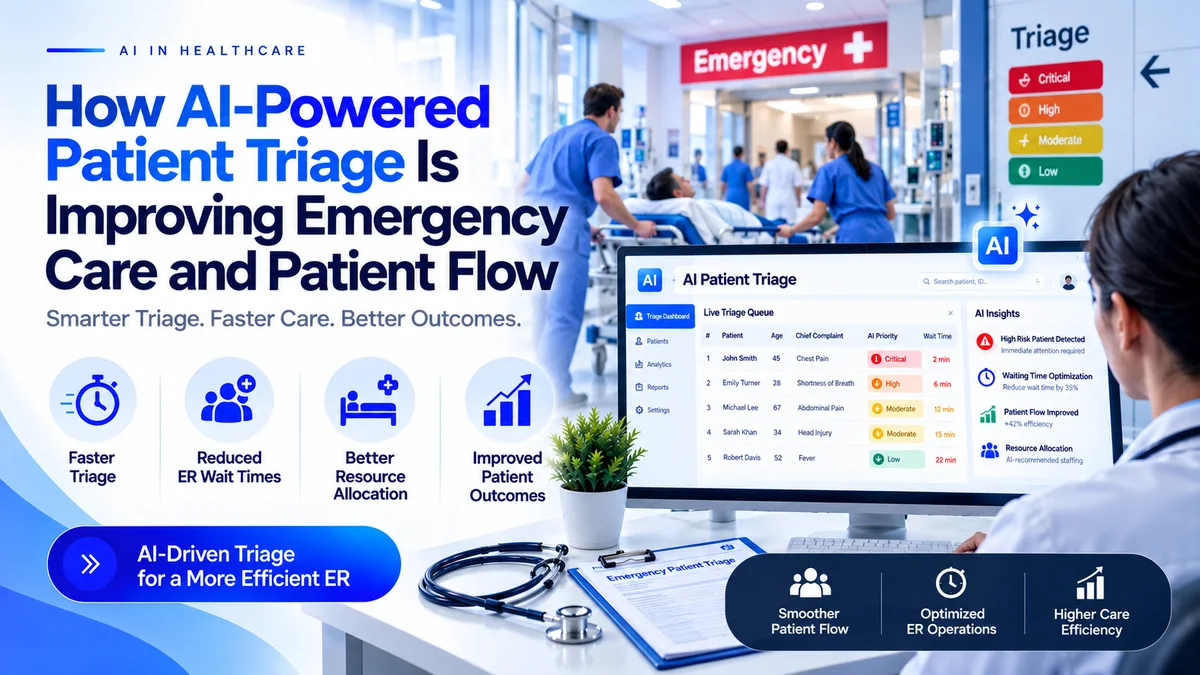
How AI-Powered Patient Triage Is Improving Emergency Care and Patient Flow
Hospitals and emergency departments often manage large numbers of patients with different levels of urgency. While some patients require immediate medical attention, others may need routine consultation or follow-up care. Managing this patient flow efficiently can be challenging for busy healthcare teams. AI-powered patient triage is helping healthcare organizations streamline the initial patient interaction, collect relevant information, and guide patients toward the appropriate care pathway.
The Challenge of Traditional Patient Triage
Traditional triage often requires healthcare staff to manually collect patient information, understand reported symptoms, prioritize cases, and direct patients to the appropriate department. During periods of high patient volume, these activities can increase administrative workload and make the initial patient journey more time-consuming.
How AI-Powered Patient Triage Works
AI-powered triage systems use conversational AI to interact with patients and collect relevant information. An AI healthcare assistant can:
- Collect basic patient and symptom information
- Ask predefined questions
- Support configured triage workflows
- Identify situations that require escalation
- Guide patients toward appropriate care pathways
- Assist with appointment booking
The AI does not replace doctors or nurses. Instead, it supports the initial information-gathering and patient-navigation process while clinical decisions remain with qualified healthcare professionals.
Key Benefits of AI-Powered Triage
- Faster Patient Intake : AI can collect basic information before a patient reaches the appropriate healthcare professional, helping streamline the initial interaction.
- Reduced Administrative Work : Automating repetitive questions and information collection can reduce the workload on reception and healthcare teams.
- Better Patient Flow : Patients can be guided toward emergency care, routine consultation, specialist care, or other configured pathways based on organizational protocols.
- 24/7 Patient Interaction : An AI assistant can provide an initial point of interaction outside traditional administrative hours, depending on the healthcare organization's setup.
- Improved Patient Experience : Patients can receive immediate conversational guidance instead of always waiting for a staff member to become available.
Virtual Jane: AI-Powered Patient Triage Assistant
Virtual Jane is an AI-powered healthcare assistant designed to support patient triage, patient intake, appointment booking, and healthcare communication. Virtual Jane can help healthcare organizations automate repetitive patient interactions while connecting patients with the appropriate healthcare workflow.
It can support:
- AI-powered patient conversations
- Symptom and information collection
- Triage workflow support
- Appointment scheduling
- Multilingual interaction
- Patient navigation
- Healthcare workflow integration
By handling routine interactions, Virtual Jane can help healthcare teams focus more of their time on tasks that require human and clinical expertise.
Real-World Applications
AI-powered patient triage can support several healthcare environments, including:
- Emergency Departments : Initial patient information collection and escalation support.
- Outpatient Clinics : Pre-visit intake and patient navigation.
- Specialist Clinics : Collecting initial information before specialist appointments.
- Telehealth : Pre-consultation patient intake.
- Follow-Up Care : Supporting patients with follow-up interactions and appointment requests.
The Future of AI in Patient Triage
As healthcare organizations continue adopting digital technologies, AI-powered triage can become an important part of connected patient-care workflows. Integration with EHR/EMR systems, appointment platforms, Hospital Information Systems, and telehealth solutions can help create a smoother journey from initial patient interaction to clinical care. The focus is not to replace healthcare professionals, but to give them better digital support for repetitive and administrative processes.
Conclusion
AI-powered patient triage can help hospitals and clinics improve patient intake, streamline workflows, and support more efficient patient navigation. With Virtual Jane, healthcare organizations can introduce an AI-powered conversational layer for patient triage, appointment booking, and patient engagement.
